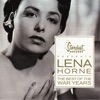
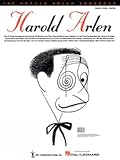
While composer Harold Arlen and lyricist Ted Koehler were writing for Harlem’s Cotton Club, they produced several hit songs, starting with “Get Happy.” The popular club featured prominent African-American entertainers such as Ethel Waters, who introduced their “Stormy Weather,” and Lena Horne, who introduced “As Long As I Live.” “Ill Wind” was written for their last show there in 1934, Cotton Club Parade, and was sung by Adelaide Hall. Their collaboration which began in the late ‘20s continued into the ‘40s when they wrote for films.
|
|
“Ill Wind” charted twice in 1934. Arlen himself sang it with the Eddy Duchin Orchestra and it rose to number three over a six week period. Leo Reisman’s Orchestra took the song to number 17 with vocalist Thelma Nevins.
|
| |
|
|
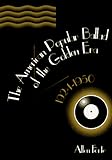
Alec Wilder in his book American Popular Song: The Great Innovators, 1900-1950 calls “Ill Wind” “unique and inspired.” Allen Forte offers an extensive analysis of the song in his book The American Popular Ballad of the Golden Era, 1924-1950: A Study in Musical Design, saying, “In many ways, beginning with its phrase organization, ‘Ill Wind’ is a remarkable song for 1934.” He points out its appeal to jazz musicians: “The chord progression over the first three-bar group is refractory in terms of conventional harmonic analysis, which is perhaps one reason it is admired by contemporary jazz musicians.” Stylistically, Arlen’s compositions tended toward jazz and blues. Says Forte, “Arlen’s very large output, its excellent quality, and, above all, its originality easily rank him among his elders in the small world of eminently talented songwriters.”
Koehler’s brooding lyric (which Forte calls “colloquially sardonic”) about the troubling aspects of love is a plea for relief:
Blow ill wind, blow away
Let me rest today
You’re blowin’ me no good (no good)
The Academy Award winning Arlen, who received the statuette for “Over the Rainbow” in 1939 and received four other nominations, was honored in 2005 with a Centennial Celebration which featured a tribute by the Academy of Motion Picture Arts and Sciences and the release of a CD, Arlen Plays Arlen, by his adopted son, saxophonist Sam Arlen.
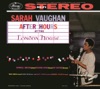
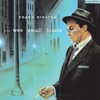
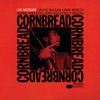
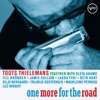
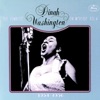
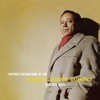
“Ill Wind” has been recorded by singers from Billie Holiday to Abbey Lincoln, and there have been many tribute albums to Arlen’s music by both singers and instrumentalists. The song was famously recorded by trumpeter Lee Morgan on his Cornbread album in 1965. “Ill Wind” is featured in recent recordings by bassist Jay Leonhart, harmonica player Toots Thielemans, saxophonist Scott Hamilton, trumpeter Terell Stafford, and vocalists Janis Seigel and Wesla Whitfield.
|