Mont Albain, Ville métropolitaine de Rome Capitale (Province de Rome), Latium, Italie
German:
Colli Albani, Metropolitanstadt Rom Hauptstadt (Provinz Rom), Latium, Italien
Italian:
Colli Albani (Vulcano dei Colli Albani; Complesso vulcanico dei Colli Albani), Città metropolitana di Roma Capitale (Provincia di Roma), Lazio, Italia
Russian:
Альбанские горы, Метрополийный город Рим-столица (Провинция Рим), Лацио, Италия
Simplified Chinese:
阿爾班山, 羅馬首都廣域市, 拉齐奥, 意大利
Spanish:
Montes Albanos, Ciudad metropolitana de Roma Capital (Provincia de Roma), Lacio, Italia
Albanian:
Monti Albani, Lacio, Italia
Breton:
Menezioù Alban, Lazio, Italia
Bulgarian:
Албани, Лацио, Италия
Catalan:
Mont Albà, Ciutat metropolitana de Roma Capital, Laci, Itàlia
Cebuano:
Colli Albani, Lacio, Italya
Czech:
Albanské hory, Lazio, Itálie
Danish:
Albanerbjergene, Lazio, Italien
Dutch:
Albaanse Heuvels, Metropolitane stad Rome Hoofdstad, Lazio, Italië
Indonesian:
Colli Albani, Lazio, Italia
Japanese:
コッリ・アルバーニ, ローマ県, ラツィオ州, イタリア
Macedonian:
Албански Ридови, Лацио, Италија
Norwegian:
Albanerfjellene, Lazio, Italia
Norwegian (Nynorsk):
Albanarfjella, Lazio, Italia
Polish:
Góry Albańskie, Miasto Stołeczne Rzym, Lacjum, Włochy
Portuguese:
Colinas Albanas, Lácio, Itália
Serbian:
Монти Албани, Лацио, Италија
Serbo-Croatian:
Colli Albani, Metropolitanski grad Rim, Lacij, Italija
Slovak:
Albanské vrchy, Lazio, Taliansko
Swedish:
Albanobergen, Lazio, Italien
Turkish:
Alban Tepeleri, Lazio, İtalya
Ukrainian:
Альбанські гори, Рим-Столиця, Лаціо, Італія
West Flemish:
Alboanse Euvels, Lazio, Itoalië
The Alban Hills (Colli Albani) are the caldera remains of the quiescent Colli Albani volcanic complex, located 20 km southeast of Rome.
The Colli Albani volcanic complex is a part of the Roman Comagmatic Region (Washington, 1908), also called Latium-Campania Perpotassic Province, which extends along the Tyrrhenian margin of Central Italy. The volcano is composite, containing multiple superposed edifices or lithosomes. This complex, whose activity lasted from ca. 700,000 years ago to Holocene (Giordano et al., 2006; De Benedetti et al., 2008), is constituted by (from bottom to top):
a) the Vulcano Laziale (VL) ignimbrite plateau and caldera complex (ca. 600–350 ka), which is a 1600 km2 plateau of ignimbrites with a central caldera. The last large eruption (> 50 km3 deposits), formed the Villa Senni Eruption Unit (VSEU) ignimbrites at ca. 355 ka. The succession of ignimbrites forms a gently sloping plateau, 2–5° inclined outward from the central caldera. The compound thickness of the succession of ignimbrite outflow sheets can be up to 200 m. The estimated deposit volume for each ignimbrite unit ranges from ca. 10 to 50+ km3. These volumes identify repeated eruptions of VL, which make this volcano one of the most explosive mafic volcanoes. It is therefore probable that the present day central caldera is the result of poly-phased collapses. The lower ignimbrites are poorly exposed mainly in distal areas. They display distinctive and common phreatomagmatic features, such as abundant (>50%) blocky shaped fine- to coarse-ash and ubiquitous presence of accretionary lapilli and have been collectively named "Pisolitic Tuffs succession". The ignimbrites and interlayered deposits that overlie the "Pisolitic tuffs succession" are much better exposed. These ignimbrites have been studied widely studied and include:
- the Pozzolane Rosse, a dark-red, massive and chaotic ignimbrite, generally 10–20 m thick, but up to 80 m thick in paleovalleys. At the base, a scoria lapilli fallout deposit is present, with dispersal axis toward the east. The matrix of the ignimbrite (60–90%) is mostly made of coarse-ash shards, and crystal fragments of leucite, clinopyroxene, and biotite. The framework is largely made by dark, porphyritic and vesicular to poorly vesicular scoria (vesicles < 40%), denser along flattened rims, seldom rounded or with fluidal shapes, up to 30 cm in diametre (up to 30% vol.), and subordinately by xenoliths of lava, thermometamorphosed carbonates from the substrate, and intrusives. Gas-pipes are frequently observed. The composition is tephritic (Trigila, 1995). The ignimbrite is likely related to a caldera collapse. A reliable 39Ar/40Ar age determination is at 457±4 ka (Karner et al.,2001). The ignimbrite is found as far as 30 km from vent beyond hills 400 m high (Giordano & Chiarabba, 1991);
– the Pozzolane Nere, a dark-grey to black, massive and chaotic ignimbrite generally 1–10 m thick. At the base a stratified scoria lapilli fallout deposit is present, with dispersal axis to the ESE and thicknessof 160 cm at 18 km from caldera centre. The matrix (80–90%) is mostly made of fine-ash shards, and crystal fragments of leucite, clinopyroxene, and biotite. The framework is made by dark-grey, porphyritic and vesicular scoria (vesicles ≤ 50%), seldom rounded or with fluidal shapes, up to 15 cm in diametre (up to 30% vol.), and subordinately by xenoliths of lava, tuffs, and intrusives. The composition is tephri-phonolitic (Trigila, 1995). The ignimbrite is likely related to a caldera collapse. A reliable 39Ar/40Ar age determination is at 407±4 ka (Karner et al.,2001);
- the Villa Senni Eruption Unit (VSEU), which presents at the base cross-stratified, coarse-ash, surge deposit, consistently few centimetres thick over more than 20 km radius from the caldera, overlain by a plane-parallel stratified scoria lapilli fallout deposit, with dispersal axis to the ENE. The fallout deposit is 100 cm thick at the caldera wall and thins to 60 cm at 10 km distance from caldera centre to the E. The fallout deposit is overlain by the Tufo Lionato ignimbrite that is a sillar, lithoidal, and yellow to orange, to brown. The matrix of the ignimbrite (80–90%) is extensively zeolitised into chabazite and phillipsite. Thickness may reach 25 m in paleovalleys, where gas-pipes are frequently observed. The composition varies from K-foiditic to tephri-phonolitic. The Tufo Lionato grades upward into the Pozzolanelle ignimbrite, a distinct depositional unit, but part of the same eruption sequence. The Pozzolanelle is a dark grey to dark red ignimbrite, massive and chaotic, generally 20 m thick and up to 80 m thick in proximal areas. Different from the Tufo Lionato, the Pozzolanelle is non-cemented and preserves its matrix supported texture. The matrix of the ignimbrite (60–90%) is made by coarse-ashs hards, and abundant crystal fragments of leucite (upto 30% of the deposit and up to 2–3 cm in diametre), clinopyroxene, and biotite. The framework is largely made by dark reddish to black, highly porphyritic and vesicular to poorly vesicular scoria (vesicles < 40%), denser along flattened rims, seldom rounded or flattened to spatter, up to 30 cm in diametre (up to 20% vol.), and subordinately by xenoliths of lava, skarn, and intrusives. Gas-pipes are frequently observed at the top. At proximal locations the Pozzolanelle ignimbrite is largely made by the co-ignimbrite breccia facies, constituted by a massive and chaotic, fines poor agglomerate of xenolith blocks up to 2 m in diametre (ca. 30–40% vol., made of lava and tuff, intrusive, skarn, sedimentary clasts in decreasing order of abundance), spatter rags (>10% vol.) and scoria bombs and lapilli (50–60% vol.). Co-ignimbrite breccia lenses are found as far as 10 km from the caldera centre. At several locations, the top of the Pozzolanelle ignimbrite is conformably covered by a succession of decimetre- to metre-thick, planar bedded scoria lapilli beds, that likely are fallout deposits from Plinian to sub-Plinian plumes erupted in the aftermath of the eruption. The composition is tephritic-phonolitic to phonolitic–tephritic. The age for the VSEU ignimbrites is indicated at 366±3 ka by Giordano et al. (2006). The VSEU eruption is the last large volume eruption from the Vulcano Laziale edifice. The shape of the present caldera is largely due to this last paroxysmal event.
These major ignimbrites are covered, especially to the E of the caldera, by successions of mainly scoria lapilli fallout beds, more or less pedogenised, by volcaniclastic deposits and at places by lavaflows. These successions have been named respectively the Corcolle succession, which overlies the Pozzolane Rosse ignimbrite, the Centogocce succession, which overlies the Pozzolane Nere ignimbrite, and the Madonna degli Angeli succession, which overlies the VSEU. These deposits are important and record the style of activity after major caldera collapses.
b) the Tuscolano-Artemisio peri-caldera fissure system and the Faete intra-caldera stratovolcano (∼350–260 ka). Two edifices were built within the Vulcano Laziale (VL) caldera: (1) The horseshoe-shaped Tuscolano-Artemisio (TA) composite edifice (or lithosome) consisting of coalescing, peri-caldera, fissure-related scoriae cones interbedded with lava flows; the fissure system forms two segments controlled by regional fractures; (2) The steep-sided Faete stratovolcano (Maschio delle Faete cone, 949 m a.s.l.) which filled the caldera. The TA and Faete lithosomes partly interfinger. Their products indicate reduced eruption rates relative to the VL period and a change to effusive and mildly explosive eruptions.
In particular, the Tuscolano-Artemisio (TA) composite lithosome is exposed at the continuous and steep ridge, up to 300 m high, that runs along the caldera rim, along two distinct, almost orthogonal segments: the Tuscolano section runs WNW–ESE, from Monte Tuscolo to Monte Castellaccio, where the system sharply changes direction to the SW forming the Artemisio segment. The ridge comprises coalescing scoria cones and lava fissures and resembles a large lava and spatter rampart structure. Two succession have identified: the Madonna degli Angeli succession and the Tuscolo succession separated by asignificant unconformity (Giordano et al., 2006).
The Madonna degli Angeli (MDA) succession overlies the paleosoil developed at the top of the VSEU, and therefore represents the rejuvenation of volcanic activity after the VSEU eruption. The succession displays variable thicknesses, ranging from 80 to less than 5 m. It is thicker at the caldera wall and thins laterally. The MDA deposits are distributed unevenly around the caldera, being thicker and much more extensively present eastward from the caldera. At proximal locations, especially along the caldera walls, the MDA succession is made by alternating lava, scoria, and welded scoria fall deposits, that display define local monogenetic Hawaiian to Strombolian centres. These peri-caldera centres are interbedded with beds of well sorted, vesicular scoria lapilli and lithic clasts. Individual beds are up to 1.5 m thick. These scoria beds can be traced outward for tens of kilometres to the east, well over the Apennine mountains with compound dispersal areas, covering more than 600 km2. The available age constrain to the emplacement of the MDA succession is the 39Ar/40Ar age determination at 351±3ka for a lava dyke that cuts the MDA deposits at Monte Castellaccio (Karner et al., 2001).
The Tuscolo (TSC) succession is made by scoria, welded scoria, clastogenic lavas and lava units. The deposits are mostly made by poorly sorted to sorted, poorly stratified to bedded, bomb- to lapilli-size scoria(>90%) with subordinated block and lapilli lava xenoliths. Scoria beds grade, close to vent, from welded scoria to clastogenic lavas. Scoria beds can bereferred to several peri-caldera coalescing scoria, spatter and lava cones, which still preserve their original morphology. The present day morphological relief of the caldera is mostly made by the TA deposits. The TSC fissure-related coalescing centres are still well preserved and cover theerosional unconformity that cuts the MDA succession. The scarce 39Ar/40Ar age determinations on lavas belonging to the TSC succession indicate the emplacement are at ca. 310 ka. The Pantano Borghese member is part of the TSC succession, and is made of lavas, scoria cones, and one maar (the Castiglione maar) issuing from the NW–SE Pantano Borghese fissure, located approximately 4 km to the NE of the almost parallel Monte Tuscolo–Monte Castellaccio peri-caldera fissure. The Pantano Borghese fissure is more recent than scoria cones and lava flows erupted from the Monte Tuscolo-Monte Castellaccio fissure. The age of the Pantano Borghese member is constrained between ca. 300 and ca. 260 ka.
The Faete lithosome is the product of the main stratocone that rises from the caldera floor at 500 m a.s.l., to the almost 1000 m a.s.l. at its top. The flanks are steep, up to 45° inclined and along the lower reaches there are several eccentric scoria cones. The top of the volcano is truncated by a circular (2×2 km) depression usually interpreted as a small collapse caldera (De Rita et al., 1988), along the edges of which two scoria cones are located, Monte Cavo and Colle Iano scoria cones. The main stratovolcano is made by the Rocca di Papa succession, mostly made of lava, welded scoria, and scoria fall deposits, indicating an effusive to mild explosive style of activity. The presence of unconformities, paleosoils and volcaniclastic deposits indicate that the stratocone was built during successive phases of activity. Available K/Ar and 39Ar/40Ar age determinations on lava samples from this succession range from ca. 290 to 260 ka and indicate that the construction of the Faete edifice was at least in part contemporaneous to the edification of the Tuscolano-Artemisio composite lithosome. A significant unconformity at the top of the Rocca di Papa succession underlines an important change of eruptive style to phreatomagmatism. At least three ash- and accretionary lapilli-rich deposits separated by paleosoils, collectively named Campi di Annibale succession are present at the top of the Rocca di Papa succession. The phreatomagmatic products discontinuously drape the inner walls of the summit crater, are almost absent from the highly inclined slopes of the Faete edifice, and mostly pond within the caldera floor. A thin veneer made by an accretionary lapilli-rich ash-layer is ubiquitously present and covers the TSC succession, indicating that the phreatomagmatic phase of the Faete edifice postdates the edification of the Tuscolano-Artemisio ridge. The occurrence of phreatomagmatic eruptions suggests to reconsider the origin of the summit depression of the Faete at least partly as the crater of a summit tuff ring. The phreatomagmatic deposits are covered by the Monte Cavo and Colle Iano scoria cones, which close the eruptive history of the Faete stratovolcano.
The larger, peripheral lava flows attributed to the Faete phase span the interval 298-277 ka. The observed and/or inferred vents of the Capo di Bove, Divino Amore, Frascati-Monte Mellone, Monte Falcone, Osa, and Saponara lava flows cluster in a relatively narrow northeast-southwest-oriented band, indicating a possible peripheral vent system corresponding to a buried, pre-existing tectonic lineament. The oldest dated lava flow from this phase of activity, the Monte Mellone lava flow (308±2 ka), is associated with other small lava flows that erupted in the same area. Among these, the Frascati lava flow shows the most primitive composition of the Alban Hills rock types. Younger ages (267-268 ka) have other minor lava flows and lavas cut by later phreatomagmatic craters, such as the lava flow cut by the Albano crater, which are associated with central vent activity of the Faete edifice.
c) the Via dei Laghi maar field. The most recent activity is confined to the Via dei Laghi maar field (Giordano et al., 2006), where phreatic to phreatomagmatic eruptions formed overlapping maars and tuff cones along the western and northern slopes of the volcano. From the oldest to the youngest, it is possible to identify the maars of Pantano Secco, Prata Porci, Valle Marciana, Nemi, Ariccia, Laghetto di Giuturna, and Albano, the latter being the most recent centre of volcanic activity. The young Albano maar centre gave rise to a succession of rock-units which, from the lowermost towards the uppermost one, are presently named the Montagnaccio, Coste dei Laghi, Corona del Lago, Cantone, Peperino Albano, Villa Doria, and Albalonga units.
The Via dei Laghi composite lithosome includes all phreatomagmatic and phreatic products related to the mostly eccentric activity that has characterised the Colli Albani since approximately 200 ka (the oldest age available for the products from Ariccia maar; Marra et al. 2003) to the Holocene (5.8±0.1 ka) for the Tavolato succession from the Albano maar. It is a composite lithosome made by several overlapping maars, located along the western and northern slope of the volcano. The maars of Valle Marciana, Pantano Secco, Prata Porci, and Ariccia are monogenetic, whereas Albano (at least 7 eruptions), Laghetto (2 eruptions), and Nemi (2 eruptions) are polygenetic, i.e. made by coalescing craters. The lithosome comprises a series of maars, characterised by gentle slopes, 2–10° inclined, abruptly interrupted by the inner walls of the craters, two of which, Albano and Nemi, presently still host lakes. The Albano maar is the most recent and still active maar, although quiescent (Funiciello et al., 2003). Available age determinations indicate that the recent activity from Albano span from 39Ar/40Ar 45±3 ka to 14C 5.8±0.1 ka. The typical lithofacies is plane-parallel to low-angle cross-stratified, with alternating ash-rich and accretionary- or armored-lapilli-rich layers generally strongly cemented for the zeolitisation of the glass shards, and ash-matrix supported to ash-free, poorly vesicular scoria lapilli beds. Xenoliths of lava, intrusive, and sedimentary carbonate are ubiquitously present, and may form breccia divisions, at proximal locations, i.e. along the inner maar walls. Ash shards generally show blocky shapes. A second typical lithofacies is found mostly ponded within paleovalleys and within craters, where deposits are massive and chaotic, strongly zeolitised, ash-matrix supported, with up to 10–15% of up to metre size blocks of lava, intrusive, and carbonate sedimentary xenoliths. Thicknesses may reach 30 m. This lithofacies isassociated with higher sedimentation rates where topography acted as a sedimentary trap. Phreatomagmatic deposits do not show transition to deposits from purely magmatic phases, like scoria cones or lava flows.
Recent studies (Funiciello et al., 2003, De Benedetti et al., 2008) identified in addition a number of lahar deposits due to intermittent water overflows from the Albano lake, which filled the previous Würmian valley fan around the crater (particularly those toward the north and north-west mountain side) and covered the very last phreatomagmatic deposits from the Albano maar. Such lahars constitute the Tavolato formation, where several individual thin units have been identified (Laurora et al., 2009), the uppermost of which was radiometrically dated 5.8 ka (Giordano et al., 2010). However, stratigraphic and archaeological evidence shows that some of them emplaced even during Roman times (De Benedetti et al., 2008). The lahars of the Tavolato formation represent a chaotic sampling of most if not all eruptive and explosive deposits of the Colli Albani Volcano. All the recent explosive products and derived lahar deposits are characterised by the presence of xenoliths of sedimentary, metamorphic, and magmatic nature.
Numerous mineral localities are now in a protected area (Regional Park of the Castelli Romani), where quarrying and collecting is forbidden.
Select Mineral List Type
StandardDetailedGalleryStrunzChemical Elements
Mineral List
Mineral list contains entries from the region specified including sub-localities
100 valid minerals. 6(TL) - type locality of valid minerals. 1(FRL) - first recorded locality of unapproved mineral/variety/etc. 1 erroneous literature entry.
Rock Types Recorded
Note: data is currently VERY limited. Please bear with us while we work towards adding this information!
Rock list contains entries from the region specified including sub-localities
Description: Reported without references in Anthony et al. (1995, reprinted 2003).
Many specimens of presumed ashcroftine-(Y) submitted for analysis resulted to be amorphous or non-crystalline (see http://forum.amiminerals.it/viewtopic.php?t=6071). According to Carlini & Signoretti (2018) the lilac, brown or creamy interlaced acicular crystals or felted masses incorrectly attributed in the past by some collectors to ashcroftine-(Y) are referable to more or less altered terms of the ludwigite-vonsenite series.
Description: Erroneously identified as lead in Caponera I., Fiori S., Pucci R., 2003. Fluoborite, piombo nativo, richterite ed altri interessanti ritrovamenti nei Colli Albani. Il Cercapietre, 1-2.
Description: Found only once in 1975, as white sericeous prisms to 3 mm in length, in a veinlet without other zeolites. Associated with fluorapatite, calcite, and nepheline.
There are 3 fossil localities from the PaleoBioDB database within this region.
These data are provided on an experimental basis and are taken from external databases. Mindat.org has no control currently over the accuracy of these data.
This page contains all mineral locality references listed on mindat.org. This does not claim to be a complete list. If you know of more minerals from this site, please register so you can add to our database. This locality information is for reference purposes only. You should never attempt to
visit any sites listed in mindat.org without first ensuring that you have the permission of the land and/or mineral rights holders
for access and that you are aware of all safety precautions necessary.
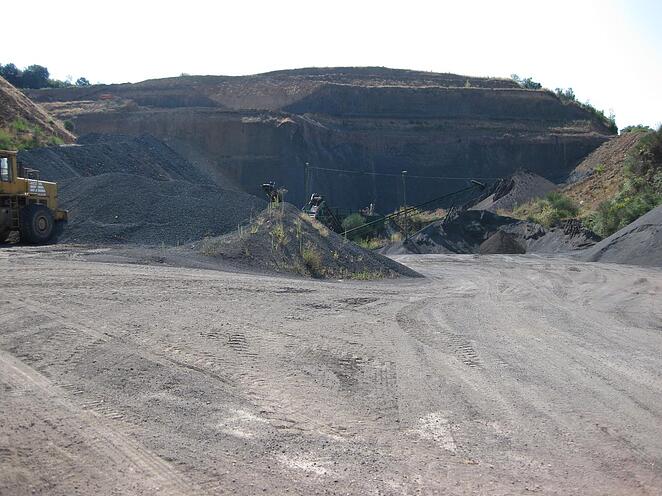
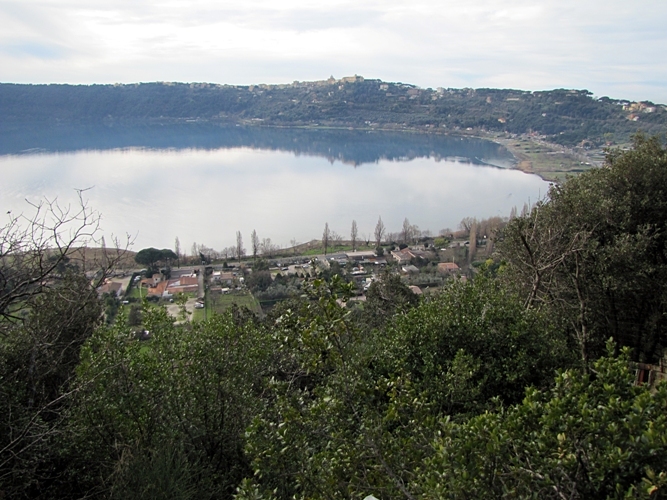
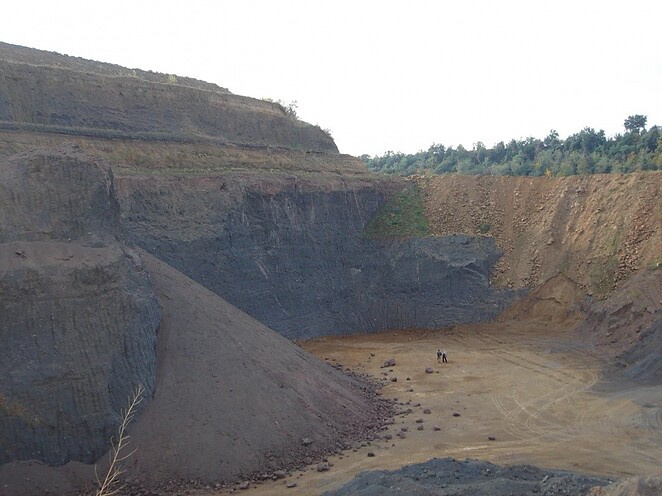


Corcolle Quarry, Rome, Metropolitan City of Rome Capital, Lazio, Italy