Ginorite
A valid IMA mineral species
This page is currently not sponsored. Click here to sponsor this page.
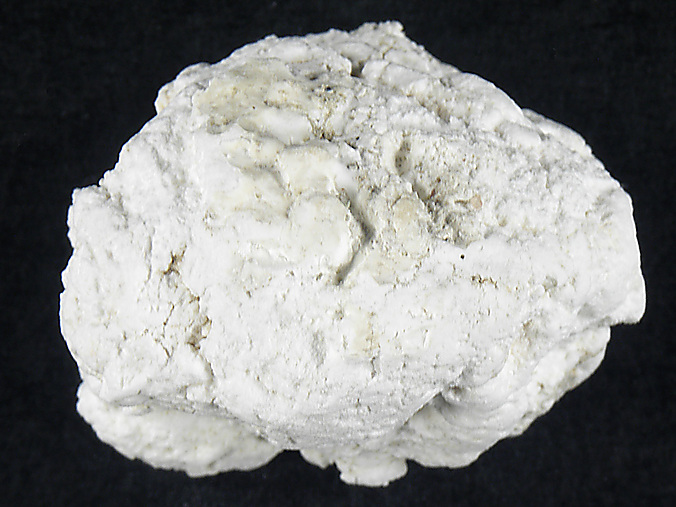
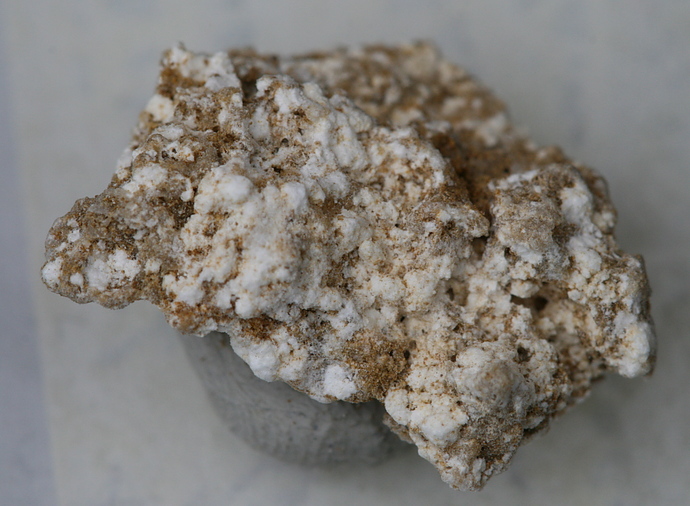
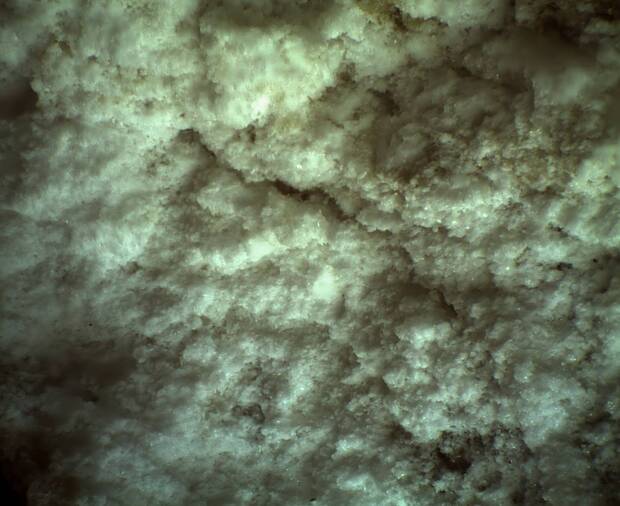
About Ginorite
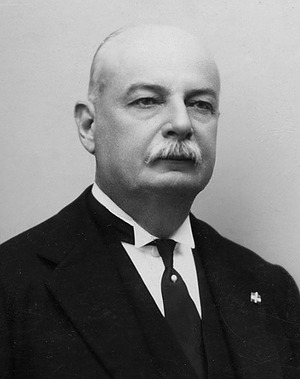
Piero Ginori Conti
Formula:
Ca2B14O20(OH)6 · 5H2O
Colour:
White
Hardness:
3½
Specific Gravity:
2.07 - 2.14
Crystal System:
Monoclinic
Name:
Named in honor of Piero Ginori Conti (3 June 1865, Florence, Italy – 3 December 1939, Florence, Italy), Prince of Trevignano, businessman and politician. He was a leader in development of the Tuscan borax industry. He also developed geothermal power in the area.
Unique Identifiers
Mindat ID:
1696
Long-form identifier:
mindat:1:1:1696:0
Similar Names
| Gunnarite | ~Fe3Ni2S8 |
IMA Classification of Ginorite
Approved, 'Grandfathered' (first described prior to 1959)
First published:
1934
Type description reference:
Classification of Ginorite
6.FC.15
6 : BORATES
F : Hexaborates
C : Phyllo-hexaborates
6 : BORATES
F : Hexaborates
C : Phyllo-hexaborates
26.6.7.1
26 : HYDRATED BORATES CONTAINING HYDROXYL OR HALOGEN
6 : Hexaborates
26 : HYDRATED BORATES CONTAINING HYDROXYL OR HALOGEN
6 : Hexaborates
9.3.19
9 : Borates
3 : Borates of Ca and Sr
9 : Borates
3 : Borates of Ca and Sr
Mineral Symbols
As of 2021 there are now IMA–CNMNC approved mineral symbols (abbreviations) for each mineral species, useful for tables and diagrams.
| Symbol | Source | Reference |
|---|---|---|
| Gnr | IMA–CNMNC | Warr, L.N. (2021). IMA–CNMNC approved mineral symbols. Mineralogical Magazine, 85(3), 291-320. doi:10.1180/mgm.2021.43 |
Physical Properties of Ginorite
Transparency:
Transparent, Translucent
Colour:
White
Streak:
White
Hardness:
3½ on Mohs scale
Cleavage:
Distinct/Good
On {010} with unstated quality.
On {010} with unstated quality.
Density:
2.07 - 2.14 g/cm3 (Measured) 2.09 g/cm3 (Calculated)
Optical Data of Ginorite
Type:
Biaxial (+)
RI values:
nα = 1.517 nβ = 1.524 nγ = 1.577
2V:
Measured: 42° (2), Calculated: 42°
Max. Birefringence:
δ = 0.060
Based on recorded range of RI values above.
Based on recorded range of RI values above.
Interference Colours:
The colours simulate birefringence patterns seen in thin section under crossed polars. They do not take into account mineral colouration or opacity.
Michel-Levy Bar The default colours simulate the birefringence range for a 30 µm thin-section thickness. Adjust the slider to simulate a different thickness.
Grain Simulation You can rotate the grain simulation to show how this range might look as you rotated a sample under crossed polars.
The colours simulate birefringence patterns seen in thin section under crossed polars. They do not take into account mineral colouration or opacity.
Michel-Levy Bar The default colours simulate the birefringence range for a 30 µm thin-section thickness. Adjust the slider to simulate a different thickness.
Grain Simulation You can rotate the grain simulation to show how this range might look as you rotated a sample under crossed polars.
Surface Relief:
Moderate
Dispersion:
none
Optical Extinction:
Y = b; Z ∧ c = 39°
Comments:
Positive elongation
Chemistry of Ginorite
Mindat Formula:
Ca2B14O20(OH)6 · 5H2O
Element Weights:
Elements listed:
Crystallography of Ginorite
Crystal System:
Monoclinic
Class (H-M):
2/m - Prismatic
Space Group:
P21/b
Setting:
P21/c
Cell Parameters:
a = 12.738(1) Å, b = 14.240(1) Å, c = 12.750(1) Å
β = 101.163(2)°
β = 101.163(2)°
Ratio:
a:b:c = 0.895 : 1 : 0.895
Unit Cell V:
2,268.96 ų (Calculated from Unit Cell)
Z:
4
Morphology:
Crystals are flat tablets {010}. Dense masses.
Lozenge or rhomb shaped plates with acute angle of ~78-79°.
Lozenge or rhomb shaped plates with acute angle of ~78-79°.
X-Ray Powder Diffraction
Powder Diffraction Data:
| d-spacing | Intensity |
|---|---|
| 7.18 Å | (100) |
| 5.36 Å | (80) |
| 2.09 Å | (80) |
| 3.57 Å | (60) |
| 3.28 Å | (60) |
| 3.90 Å | (50) |
| 3.12 Å | (50) |
Geological Environment
Paragenetic Mode(s):
| Paragenetic Mode | Earliest Age (Ga) |
|---|---|
| Stage 7: Great Oxidation Event | <2.4 |
| 47a : [Near-surface hydration of prior minerals] | |
| 47c : [Carbonates, phosphates, borates, nitrates] |
Type Occurrence of Ginorite
General Appearance of Type Material:
Lozenge-shaped plates. Minutely granular.
Place of Conservation of Type Material:
n.d.
Geological Setting of Type Material:
Veins in sandstone.
Associated Minerals at Type Locality:
Synonyms of Ginorite
Other Language Names for Ginorite
Dutch:Ginoriet
German:Ginorit
Cryptomorphit
Cryptomorphit
Simplified Chinese:水硼钙石
Spanish:Cryptomorphita
Ginorita
Ginorita
Traditional Chinese:水硼鈣石
Related Minerals - Strunz-mindat Grouping
| 6.FC.05 | Nobleite | CaB6O9(OH)2 · 3H2O |
| 6.FC.05 | Tunellite | SrB6O9(OH)2 · 3H2O |
| 6.FC.10 | Strontioborite | Sr[B8O11(OH)4] |
| 6.FC.15 | Strontioginorite | CaSrB14O20(OH)6 · 5H2O |
| 6.FC.20 | Fabianite | CaB3O5(OH) |
Other Information
IR Spectrum:
Chelkar dome material (Mott prospect material in brackets) [cm-1]: (3480sh), (3420sh), 3370 (3330), 3280, 3125 (3140), 3000sh (3020sh), 1650 (1655w), 1460s (1480sh), 1396s (1381s), 1339s (1329s), 1259 (1250), 1191 (1189), 1170 (1165sh), 1129s (
Notes:
Insoluble in water.
Health Risks:
No information on health risks for this material has been entered into the database. You should always treat mineral specimens with care.
Internet Links for Ginorite
mindat.org URL:
https://www.mindat.org/min-1696.html
Please feel free to link to this page.
Please feel free to link to this page.
Search Engines:
External Links:
References for Ginorite
Reference List:
Hey, M. H., Bannister, F. A. (1952) The identity of cryptomorphite and ginorite. Mineralogical Magazine and Journal of the Mineralogical Society, 29 (218) 955-959 doi:10.1180/minmag.1952.029.218.09
Allen, Robert D., Kramer, Henry (1957) Ginorite and sassolite from Death Valley, California. American Mineralogist, 42 (1-2) 56-61
Chukanov, Nikita V. (2014) Infrared spectra of mineral species Vol. 1 - Springer Geochemistry/Mineralogy. Springer Netherlands. doi:10.1007/978-94-007-7128-4
Pankova, Yulia A., Gorelova, Liudmila A., Krivovichev, Sergey V., Pekov, Igor V. (2018) The crystal structure of ginorite, Ca2[B14O20(OH)6]·5H2O, and the analysis of dimensional reduction and structural complexity in the CaO–B2O3–H2O system. European Journal of Mineralogy, 30 (2) 277-287 doi:10.1127/ejm/2018/0030-2695
Localities for Ginorite
 symbol to view information about a locality.
The
symbol to view information about a locality.
The Locality List
 - This locality has map coordinates listed.
- This locality has estimated coordinates.
ⓘ - Click for references and further information on this occurrence.
? - Indicates mineral may be doubtful at this locality.
- This locality has map coordinates listed.
- This locality has estimated coordinates.
ⓘ - Click for references and further information on this occurrence.
? - Indicates mineral may be doubtful at this locality.
 - Good crystals or important locality for species.
 - World class for species or very significant.
(TL) - Type Locality for a valid mineral species.
(FRL) - First Recorded Locality for everything else (eg varieties).
- World class for species or very significant.
(TL) - Type Locality for a valid mineral species.
(FRL) - First Recorded Locality for everything else (eg varieties).
All localities listed without proper references should be considered as questionable.
Argentina | |
| Bull. Soc. Franç. Minéralo. ... +4 other references |
Canada | |
| How (1861) |
Italy (TL) | |
| D'Achiardi (1934) +1 other reference |
Kazakhstan | |
| Handbook of Mineralogy Vol V p 6 +2 other references |
| Pekov et al. (1993) +1 other reference |
Russia | |
| Garrett (1998) |
USA | |
| Cook et al. (1982) |
| Pemberton (1983) +1 other reference |
| Erd et al. (1959) +2 other references |
| Allen (1957) +7 other references |
| Erd et al. (1979) |
East Coleman Mine, Furnace Creek, Inyo County, California, USA