Staurozoa
This page is currently not sponsored. Click here to sponsor this page.

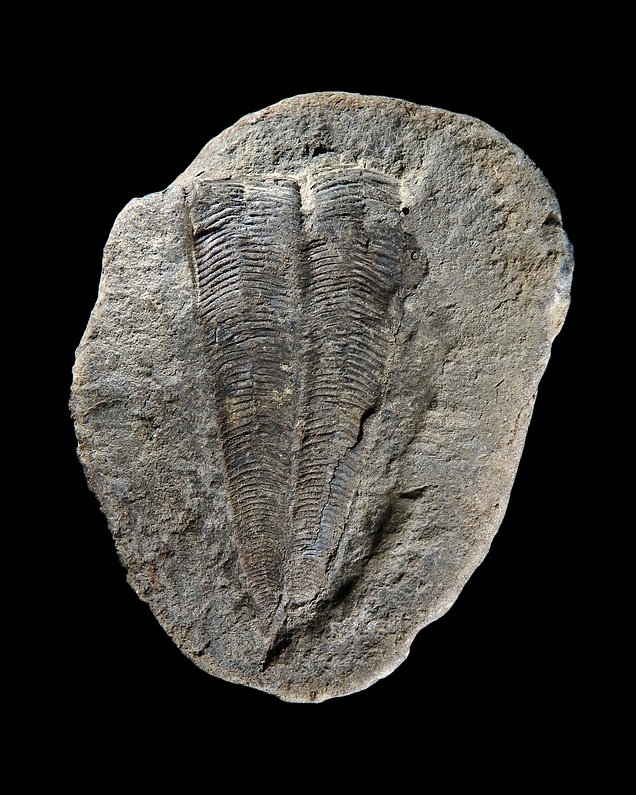
| Description | Staurozoa is a class of Medusozoa, jellyfishes and hydrozoans. It has one extant order, Stauromedusae (stalked jellyfishes), and one extinct order, Conulatae. The extinct order is largely unknown and described as a possibly cnidarian clade of marine life with shell-like structures, the Conulariida. Staurozoans are small animals (1–4 cm or 0.4–1.6 in) that live in marine environments, usually attached to seaweeds, rocks, or gravel. They have a large antitropical distribution, a majority found in boreal or polar, near-shore, and shallow waters. Few staurozoans are found in warmer tropical and subtropical water environments of the Atlantic, Indian, and Pacific Ocean basins, but most are known from the Northern Hemisphere. From Wikipedia article at https://en.wikipedia.org/wiki/Staurozoa, which is released under the Creative Commons Attribution-Share-Alike License 4.0. | ||||||||||||||||||
|---|---|---|---|---|---|---|---|---|---|---|---|---|---|---|---|---|---|---|---|
| Source Data |
| ||||||||||||||||||
| Rank | class | ||||||||||||||||||
| Taxonomy (GBIF) | Life : Animalia : Cnidaria : Staurozoa | ||||||||||||||||||
| Taxonomic Status (GBIF) | accepted | ||||||||||||||||||
| Classification (GBIF) |
| ||||||||||||||||||
| Scientific Name | Staurozoa | ||||||||||||||||||
| Common Name(s) | Stalked Jellyfishes, 十文字クラゲ | ||||||||||||||||||
| Wikipedia | https://en.wikipedia.org/wiki/Staurozoa |
External Images


Subtaxa
| Name | Status | Common Name(s) | Fossil Occurrences | Oldest | Youngest |
|---|---|---|---|---|---|
| Stauromedusae order | accepted (GBIF) | No associated record in PBDB | |||
References
| Guberlet, Muriel Lewin (1936) Animals of the Seashore - via Staurozoa |
| Berrill, Michael (1963) Comparative functional morphology of the stauromedusae - via Staurozoa |
| Marques, Antonio C., and Allen G. Collins, 2004: Cladistic analysis of Medusozoa and cnidarian evolution. Invertebrate Biology, vol. 123, no. 1. 23-42. - via Integrated Taxonomic Information System (ITIS) |
| Quezada, A.E. (1969) Haliclystus auricula (Rathke, 1806) (Coelenterata, Scyphozoa, Stauromedusae) en el Golfo de Arauco (Chile) - via Staurozoa |
| Marques, Antonio C.,Schuchert, Peter,Jankowski, Thomas,Schierwater, Bernd,Collins, Allen G,Medina, Mónica (2006 Feb) Medusozoan phylogeny and character evolution clarified by new large and small subunit rDNA data and an assessment of the utility of phylogenetic mixture models - via Staurozoa |
| Kishinouye, Kamakichi (1910) Some Medusae of Japanese Waters - via Staurozoa |
| Panikkar, N.K. (09/1944) Occurrence of a stauromedusa on the Indian coast - via Staurozoa |
| MARYMEGAN DALY, MERCER R. BRUGLER, PAULYN CARTWRIGHT, ALLEN G. COLLINS, MICHAEL N. DAWSON, DAPHNE G. FAUTIN, SCOTT C. FRANCE, CATHERINE S. MCFADDEN, DENNIS M. OPRESKO, ESTEFANIA RODRIGUEZ, SANDRA L. ROMANO & JOEL L. STAKE (2007) The phylum Cnidaria: A review of phylogenetic patterns and diversity 300 years after Linnaeus. Zootaxa 1668: 127–182. In: Zhang, Z.-Q. & Shear, W.A. (Eds) (2007) Linnaeus Tercentenary: Progress in Invertebrate Taxonomy. Zootaxa, 1668, 1–766. - via Dyntaxa. Svensk taxonomisk databas |
| Daly, M., M.R. Brugler, P. Cartwright, A.G. Collins, M.N. Dawson, D.G. Fautin, S.C. France, C.S. McFadden, D.M. Opresko, E. Rodriquez, S.L. Romano, J.L. Stake. (2007). The phylum Cnidaria: A review of phylogenetic patterns and diversity 300 years after Linnaeus. Zootaxa. (1668): 127-182. - via World Register of Marine Species |
| Marques, A.C., Collins A.G., 2004. Cladistic analysis of medusozoa and cnidarian evolution. Inv. Biol. 123 1: 23-42. - via World Register of Marine Species |
Data courtesy of: PBDB: The Paleobiology Database, Creative Commons CC-BY licenced. , GBIF: the Global Biodiversity Information Facility, various licences, iDigBio, various licences, and EOL: The Encyclopedia of Life (Open Data Public Domain). Because fossils are made of minerals too!
Patacamaya, Patacamaya Municipality, Aroma Province, La Paz, Bolivia